

A guided safari in Tanzania has no single fixed price. The total depends on trip length, parks, accommodation, season and whether you add Zanzibar. For a Great Migration journey, booking six to twelve months ahead gives you more time to plan around preferred camps and dates. You can also pair a Serengeti safari with a Zanzibar or beach stay.
It’s natural to want a clear budget before choosing a route. The price reflects how much time you spend in the parks, your accommodation style and how you travel between destinations. A tailored quote is based on those choices.
This guide explains what affects safari costs, when to plan your booking and how a bush-to-beach itinerary can flow from the Serengeti to Zanzibar. It also compares package styles so you can choose a journey that suits your available time and priorities.
Key Takeaways
- Compare safari packages by what shapes the experience, including park time, accommodation style and how you travel between destinations.
- Use Arusha as a practical starting point when mapping a Northern Circuit route, then consider how much time you want in each park.
- Plan the Serengeti and Zanzibar as one journey to create a smooth transition from wildlife viewing to time by the coast.
- Compare sample itineraries by duration and travel style to find a package structure that suits your priorities.
How far in advance should I book?
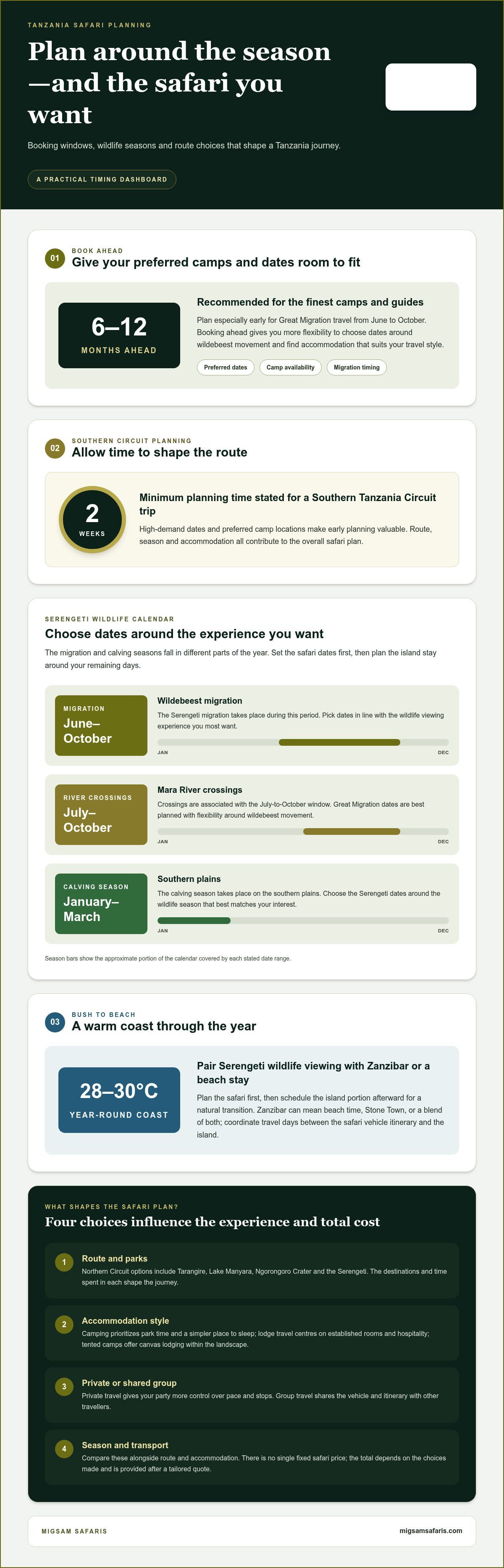
For the finest camps and guides, book six to twelve months ahead, especially for Great Migration travel from June to October. Planning early gives you more flexibility to choose dates around wildebeest movement and find accommodation that suits your travel style. For a Southern Tanzania Circuit trip, allow at least two weeks to plan. High-demand dates and preferred camp locations make early planning valuable.
Budget and accommodation level work together. A camping itinerary prioritizes time in the parks and a simpler place to sleep, while lodge travel centres on established rooms and on-site hospitality. Tented camps offer another balance: canvas accommodation set within the landscape, with comfort shaped by the camp itself. The total safari price depends on trip length, route, season, accommodation and transport, and is provided after a quote request.
On the Northern Circuit, compare how each stay fits the route through Tarangire, Lake Manyara, the Serengeti and Ngorongoro Crater. A lodge-based plan may suit travellers who want a settled room after game drives; camping may appeal to those who value a closer outdoor feel. Tented camps offer the atmosphere of canvas lodging without the feel of a conventional campsite. Consider which setting you would most enjoy after a day on safari.
Full-board lodge accommodation includes meals, helping you plan each day around game drives rather than separate meal arrangements. Before choosing a package, list your preferred parks, dates and accommodation style, then compare itineraries against those priorities. Add a Kilimanjaro climb only if it fits your wider trip plan. Start planning early for the Great Migration; allow at least two weeks for a Southern Circuit journey.
How much does a Tanzania safari cost?
The total depends on route, accommodation, season and whether you travel privately or in a group. Arusha is a useful starting point when planning Northern Circuit destinations.
Safari Circuits and Route Options
From Arusha, a Northern Circuit route can include Tarangire National Park, Lake Manyara, Ngorongoro Crater and the Serengeti. Tanzania’s northern parks bring varied landscapes and wildlife viewing into one itinerary; the order and time spent in each destination shape the journey’s cost. Compare park choices alongside accommodation and transport, not as isolated items.
Northern and Southern circuits suit different route plans. In the Serengeti, the central, northern and western areas each offer a different setting for wildlife viewing, while the Southern Circuit takes you away from the northern park cluster. Choose destinations first, then weigh travel time and park fees.
Guided Safari Types and Group Options
Guided safaris can be private or shared group trips, with camping, lodge and luxury accommodation styles. A private safari gives your party more control over pace and stops; a group safari shares the vehicle and itinerary with other travellers. Compare the factors that matter most to your budget: group size, lodging style, route and time in each national park.
For a guided safari, look for a guide with relevant training, strong wildlife knowledge and familiarity with your route. Ask how the guide explains animal behaviour and adapts wildlife viewing respectfully.
Include park fees in your budget and follow posted park rules and your guide’s instructions. Wildlife encounters require attention to the guide’s directions. Keep a respectful distance and stay within designated areas.
Pack lightweight layers, comfortable walking shoes, sun protection and insect repellent. On a Serengeti or Tarangire itinerary, keep essentials accessible during drives rather than buried in your luggage.
For a route centred on northern parks, explore Classic Northern Circuit Safaris as one way to shape your destinations and guided experience.
Can I combine the Serengeti with Zanzibar or a beach stay?
Yes. Pairing the Serengeti with Zanzibar creates a Tanzania itinerary that moves from wildlife viewing to coast and culture. Plan the safari first, then schedule the island stay afterward for a natural transition between destinations. Stone Town offers historic streets and architecture, while Zanzibar’s beaches provide time beside the Indian Ocean.
Season matters if the migration is central to your safari. The Serengeti wildebeest migration takes place between June and October, with Mara River crossings from July to October. Calving season on the southern plains runs from January to March. Choose your Serengeti dates around the wildlife experience you most want, then plan the Zanzibar portion around your remaining days.
A safari and Zanzibar holiday can combine several kinds of travel. In the Serengeti, game drives in a safari vehicle focus on finding animals across changing landscapes; in Zanzibar, days can centre on beaches, local culture or Stone Town. Keep the island stay after the bush portion if you want a quieter finish, or place Stone Town between the safari and beach for a change of pace.
For a smooth plan, settle these details together:
- Safari focus: Choose the Serengeti area and season that fit your interest in migration or calving.
- Island rhythm: Decide whether Zanzibar means beach time, Stone Town, or a blend of both.
- Travel flow: Coordinate the safari vehicle itinerary with the transition to the island, so travel days are accounted for.
- Coastal comfort: Tanzania’s coast stays around 28 to 30°C throughout the year, making lightweight clothing useful across seasons.
Combining Africa’s wildlife and island settings works best when each part has room to breathe. Rather than treating Zanzibar as a brief add-on, choose a beach stay that complements the Serengeti’s pace and leaves time to enjoy the island.
Sample Tanzania safari packages and prices
Sample itineraries show how route, duration and accommodation shape a Tanzania safari package. Price depends on those choices and is given after a quote request.
Guided Safari Package Inclusions
A guided package commonly brings together a driver-guide, safari vehicle, accommodation and meals, with park visits arranged along the route. Compare what each itinerary includes, especially overnight stays and time in wildlife areas. For example, a northern route through Tarangire National Park, Lake Manyara, Ngorongoro Crater and the Serengeti covers several distinct destinations. Their sequence affects driving time and opportunities for wildlife viewing.
Accommodation level is another important cost factor. Camping, lodges and tented camps offer different settings and service styles. Full-board lodge stays include meals, while other package formats may arrange meals differently. Read the itinerary as a whole: a lower total can reflect a shorter trip, simpler accommodation or fewer park stops, rather than a like-for-like comparison.
Safari Duration
Many visitors spend six to ten days on a Tanzania safari, while four to five days can offer a first taste. A seven-day northern itinerary, for instance, can connect Arusha with Tarangire, Ngorongoro and the Serengeti. More time allows a broader route or slower wildlife viewing; a shorter visit means choosing fewer destinations.
Guided Tanzania safari tours described in market itineraries range from seven to twenty-four days. Compare sample packages by what the days make possible, not by duration alone. A multi-park northern journey differs from a trip focused on one area or migration viewing. The best comparison matches your available time with the landscapes and wildlife experiences you value.
To shape a route around northern parks, explore a tailored safari itinerary and consider which stops deserve more time.
Migsam Safaris: Zanzibar Fly In Safaris
Migsam Safaris can shape a Tanzania journey that connects wildlife viewing with time in Zanzibar. Zanzibar Fly In Safaris suit travellers who want to link a safari with an island stay, while Safari and Zanzibar Journeys bring both experiences together in one itinerary.
For a route focused on northern parks, Classic Northern Circuit Safaris offer another way to plan your journey. Premium Luxury Safaris suit travellers looking for a more elevated safari style. The right fit depends on your preferred destinations, accommodation style and how you want the days to flow between the bush and the coast.
Ready to explore a safari and Zanzibar itinerary? Contact Migsam Safaris to start planning your journey.
Let Your Tanzania Journey Take Shape
Start with the experience you want to carry home. Perhaps it’s the quiet anticipation of a dawn game drive, the vastness of the plains or arriving at the coast after days among wildlife. Let that image guide your choices, then shape the route, pace and accommodation around it.
A guided safari in Tanzania is easier to plan when your priorities are clear. Consider which moments matter most, what travel rhythm feels comfortable and whether you want your journey to end in the bush or beside the ocean. Those decisions give your plans a personal focus instead of leaving you with a collection of destinations.
When you’re ready to turn that first idea into a considered itinerary, contact Migsam Safaris about your safari. Your Tanzania adventure can begin with a simple conversation about the journey you hope to experience.
Frequently Asked Questions
When is the best time to visit Tanzania?
The best time depends on the landscapes and weather you prefer. June to September is the long dry season, while March to May brings the long rains. November through December is the short-rains period, and December to February is a short dry season. These seasonal differences can influence road conditions, scenery and the rhythm of a wildlife itinerary.
How do I select a reliable Tanzanian tour operator?
Choose an operator whose itinerary clearly explains the route, accommodation style, guiding arrangements and what the package covers. Compare those details with your priorities, such as private travel, particular parks or a combination with Zanzibar. Request a written itinerary outlining destinations and transport arrangements, then review whether the schedule allows a realistic flow between locations.
How is the wildlife viewing in Tanzania?
Wildlife viewing varies with habitat, season and the areas on your route. The open plains of the Serengeti offer a different experience from Ngorongoro Crater or the wooded landscapes around Lake Manyara. A guide can interpret tracks, animal behaviour and changing conditions, making each drive about more than checking off sightings. Patience is part of the experience.
Which Tanzania national parks are best for a guided safari?
The best park depends on the experience you want. Serengeti National Park is a compelling choice for broad plains and migration-focused travel; Ngorongoro Crater offers a distinct crater setting, while Tarangire and Lake Manyara bring different scenery to a northern route. Arusha National Park can suit an itinerary seeking varied landscapes. Choose based on habitat, route and travel priorities.
How much does a guided safari in Tanzania cost per person?
There is no single per-person price for every itinerary. The total depends on trip length, destinations, season, accommodation, transport and whether the journey is private or shared. For a useful comparison, line up sample itineraries with the same route and lodging style, then note what each includes. A tailored price depends on the itinerary and is provided after a quote request.
When is the best time of year for a guided safari in Tanzania?
The best season depends on your wildlife priorities. For the Great Migration’s northern Serengeti river crossings, consider July to October; for calving on the southern plains, January to March offers a different focus. Dry-season travel suits visitors who prioritise drier conditions, while green-season months bring seasonal rains. Match your dates to the experience you most want from a guided safari in Tanzania.
