

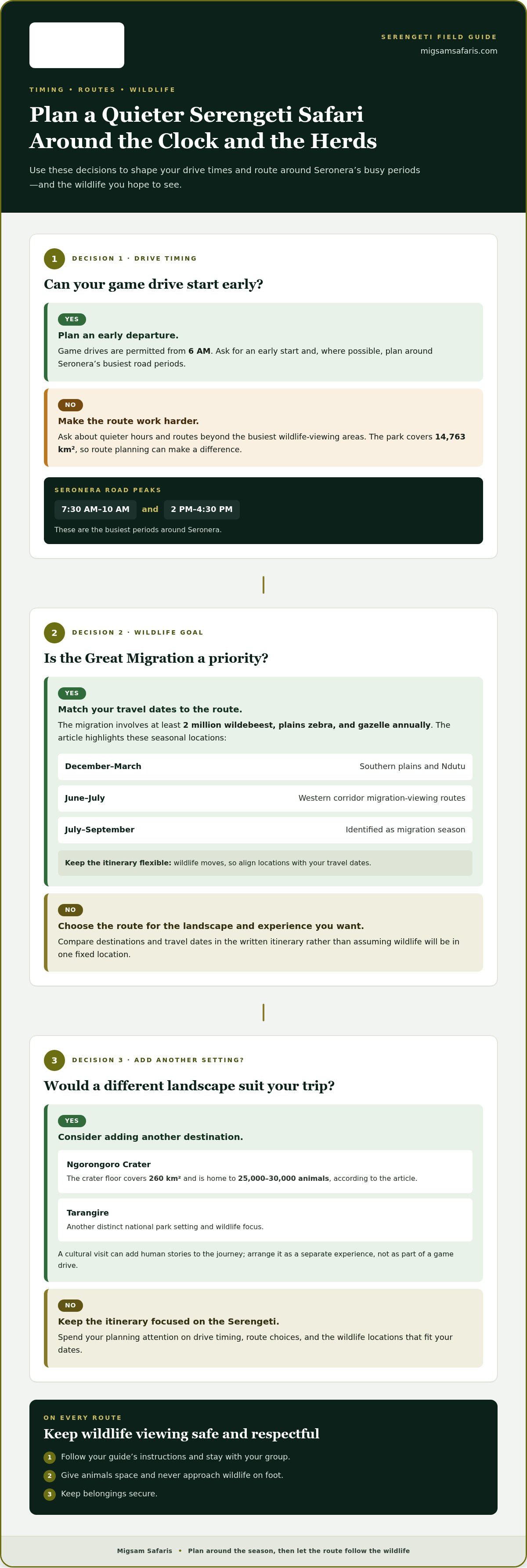
The calmest game drives come from choosing your timing and route thoughtfully, rather than avoiding the Serengeti altogether. A Serengeti safari package can be planned around early starts: game drives are permitted from 6 AM, while roads around Seronera are busiest from 7:30 AM to 10 AM and 2 PM to 4:30 PM. July to September is the wildebeest migration season, so where you travel within the park matters too.
The migration’s spectacle is a powerful reason to visit, and a well-planned Serengeti safari package can help you enjoy memorable wildlife encounters without spending the day on busy stretches of road. This guide explains what shapes package costs, how child rates and single-room supplements affect the total, and which services may be included. You’ll also find practical ways to plan game drives and choose routes with a quieter feel. From comparing road and fly-in itineraries to weighing accommodation and park fees, you’ll get a clearer picture of the decisions that shape your safari.
Key Takeaways
- Plan drives for the early hours, when you can be out from 6 AM and away from Seronera’s busiest road periods.
- Match your route and travel season to the wildlife you hope to see, including the migration’s changing locations.
- Compare what each itinerary includes, and account for child rates and single-room supplements when estimating your total.
- Look closely at flights, accommodation, meals and park fees so you understand how each package is put together.
How can I avoid the crowds on a Serengeti safari?
Begin with timing. Serengeti game drives are permitted from 6 AM, and roads around Seronera are busiest from 7:30 AM to 10 AM and 2 PM to 4:30 PM. Ask for early departures, quieter hours, and routes beyond the busiest wildlife-viewing areas. The park covers 14,763 km², so a thoughtful route can make a difference.
Choose the season for the wildlife you hope to see. The Great Migration involves at least 2 million wildebeest, plains zebra, and gazelle annually. July to September is identified as migration season; the southern plains and Ndutu are highlighted from December through March, while migration-viewing routes in the western corridor follow June through July. Wildlife moves, so align your itinerary’s locations with your travel dates.
For a different landscape, add Ngorongoro Crater to your Tanzania journey. The crater floor covers 260 km², according to the Ngorongoro Conservation Area Authority, and is home to 25,000-30,000 animals. Tarangire offers another distinct national park setting. A cultural visit can add human stories to wildlife spotting; arrange it as a separate experience within the itinerary rather than expecting it to happen during a game drive.
For entry to Tanzania, arrange the permit or visa required for your passport and travel plans. Discuss vaccinations with a travel-health professional, and arrange travel insurance that suits your itinerary and activities.
Choose a Serengeti safari operator by reviewing the written itinerary, inclusions, payment terms, and cancellation conditions. Use traceable payment methods, and be cautious of pressure to pay before receiving clear booking details.
Pack comfortable, neutral layers, sun protection, and essential medication. Follow the baggage allowance for each flight, especially if your itinerary includes a small-aircraft transfer.
For safer wildlife viewing, follow your guide’s instructions, stay with your group, and give animals space. Keep belongings secure and never approach wildlife on foot.
Tour prices, child rates and single-room supplement
Package costs reflect the route, accommodation, season, transport, and included services. Compare itinerary details before deciding which option offers the right balance for your trip.
Package Options and Prices
A Serengeti safari package may use road transport or include flights, with accommodation ranging from camping to luxury lodges. Compare the number of nights in each destination, meals, transport, and park fees rather than judging by the headline price alone. A Serengeti and Ngorongoro itinerary pairs open plains with crater scenery, while adding Tarangire brings another landscape and wildlife focus.
The price of a Serengeti safari package depends on the route, season, accommodation level, transport, and inclusions, and is provided after a quote request. A useful comparison shows which services are covered and which costs fall outside the itinerary. Make sure you are comparing similar travel styles and destinations, since fly-in and road journeys involve different logistics.
Child Rates and Room Supplements
Child rates depend on the child’s age and itinerary, so include every traveller’s age when estimating the family total. Room arrangements can affect how children share accommodation with adults. A single-room supplement applies when one guest occupies a room alone, so compare the room setup and total rather than relying only on the per-person figure.
Review accommodation arrangements across camps and lodges, especially when the route changes location. Families can consider room-sharing options, while solo travellers can weigh the added privacy of a room alone against its supplement. Clear room details make it easier to understand the total before choosing a route through the Serengeti, Ngorongoro, or Tarangire.
How long should the journey last? A three-day Serengeti and Ngorongoro safari offers a shorter visit, while a seven-day itinerary allows more time across both destinations. Choose based on how much time you want for game drives and travel between parks.
Included flights, accommodation, meals and park fees
Package inclusions shape both the journey and the time available for wildlife viewing. Compare flight connections, nights in camp, meals, game drives, and park fees before choosing.
Flights and Park Fees
Fly-in safaris can depart from Arusha or Kilimanjaro, with flights operating twice daily. A fly-in journey from Arusha reaches the Serengeti within an hour. You can pair a safari with a Zanzibar stay; review the itinerary’s flight segments to see which connections are covered.
Check whether the itinerary counts park fees within its total or lists them separately, then compare the number of nights spent inside the park. On described fly-in safaris, the accommodation property provides game drives in 4x4 safari vehicles, connecting the airstrip transfer with wildlife viewing.
Accommodation and Hotel Upgrades
Accommodation determines where you wake to the Serengeti landscape and how the safari tour moves between locations. One package includes 4 nights of accommodation in Tanzania with full board. Compare the listed lodging level, location, and meal plan, then consider whether a hotel upgrade changes the route or simply the comfort of your stay.
Luxury accommodation offers a different kind of rest between game drives, while a camp can bring you closer to the natural setting. Review the complete itinerary, not just the property category: travel between camps affects the time available to spot wildebeest, cheetah, and other wildlife.
For children, distinguish complimentary accommodation and meals from standard inclusions. A family itinerary should state which child arrangements apply, what meals are covered, and whether room sharing changes the plan. These details clarify the total without assuming every package provides children’s lodging or food at no charge.
Which packages include flights from Arusha or Zanzibar? Fly-in safaris use departures from Arusha or Kilimanjaro, and Zanzibar can be combined with a safari itinerary. Compare the listed flight legs and accommodation nights to understand how the connections fit together.
Game-drive timing and avoiding crowds
A quieter drive starts with coordinating departure time, route, and wildlife priorities. In the Serengeti, a flexible plan can help you spend less time on the same busy roads.
Game-Drive Timing
Plan each day around the landscape you want to explore instead of repeating the same route. Seronera’s main roads attract more vehicles during popular viewing periods, so discuss alternative areas and departure times with your guide. An early start can give you more time on the plains before returning to camp, while a later outing may suit a different route or wildlife focus.
Daily Game Drives
Daily drives let your guide adjust the route as animal activity and conditions change. Share priorities such as leopards, migration herds, or a quieter stretch of the plains. Your guide can balance those interests with travel time, rather than chasing every vehicle gathered around a sighting.
Route length matters. Seronera is around 300 km from Arusha by road, and the drive typically takes 5 to 6 hours, depending on the booked camp. A vehicle with a driver-guide can make the journey part of the adventure, while independent travellers can hire safari vehicles with driver-guides for local transport. Ask how the itinerary handles transfers and game viewing, so long road sections don’t unexpectedly replace time in the park.
Ngorongoro offers a striking contrast to the Serengeti plains. A crater visit changes the scenery and wildlife focus, so plan it as its own outing rather than squeezing it into a full day of Serengeti driving. A considered route leaves room for patient spotting, unhurried breaks, and your guide’s knowledge of where to look.
Before settling on a schedule, set your wildlife priorities and preferred pace, then shape the drive plan around them. Explore guided Northern Circuit safari planning for a route that connects Serengeti game drives with other landscapes.
Migsam Safaris: Zanzibar Fly In Safaris
Migsam Safaris can shape a Tanzania journey around how you want to travel, whether that means reaching the Serengeti from Zanzibar or combining wildlife viewing with time on the island. Zanzibar Fly In Safaris suit travellers seeking an air connection into a safari itinerary, while Classic Northern Circuit Safaris focus on Tanzania’s northern parks. Premium Luxury Safaris and Safari and Zanzibar Journeys offer other ways to bring comfort, wildlife, and time between destinations together.
If you know your preferred travel style but want help bringing the route, accommodation, and game-drive plans together, share your dates, interests, and desired pace. That gives your itinerary planning a useful starting point.
Contact Migsam Safaris to discuss a journey shaped around your Tanzania plans.
Shape the Safari Around What Matters to You
Turn your priorities into a journey that feels considered from arrival to the final game drive. Decide whether you want a flight-led route, a broader northern circuit, or a more luxurious stay, then use those preferences to shape your itinerary. A Serengeti safari package should fit how you want to experience Tanzania, not simply follow a standard route.
Migsam Safaris offers Zanzibar Fly In Safaris, Classic Northern Circuit Safaris, and Premium Luxury Safaris, giving you different ways to bring wildlife, travel style, and comfort together. Share the kind of journey you have in mind and start shaping the details at a pace that feels right.
Contact Migsam Safaris to discuss your safari, and take the next step toward the landscapes and wildlife you hope to discover.
Frequently Asked Questions
What animals can I expect to see in the Serengeti?
Serengeti wildlife includes wildebeest, plains zebra, gazelles, elephants, cheetahs, and leopards. The annual migration involves at least 2 million wildebeest, plains zebra, and gazelles. Birdlife adds another dimension: more than 500 bird species have been recorded in the park. Ask your guide to balance interest in large animals with time to notice birds and other wildlife along the route.
What are the pros and cons of different accommodation types?
Camping offers a simpler setting, while lodges provide a more sheltered stay; camps can offer a middle ground. Compare the atmosphere and comfort you prefer with each property’s location and how it fits your daily route. A remote-feeling camp may suit travellers who value immersion, while a lodge may better match those seeking conventional rooms and facilities.
What are the typical costs of a Serengeti safari?
Costs depend on itinerary length, transport, accommodation level, season, and included services. Fly-in and road journeys have different transport arrangements, while lodging choices and nights inside the park also shape the total. The price is provided after a quote request. Compare the same inclusions across itineraries to understand what drives the overall cost.
What is included in the price?
Inclusions vary by itinerary, so use its written day-by-day plan to see what the quoted total covers. Look for transport between destinations, accommodation, meals, guided game drives, and park or camping fees. Note which transfers connect arrival points with camps, and whether each travel day includes wildlife viewing. This makes it easier to compare itineraries based on the experience they provide.
What opportunities are there to meet local Maasai people?
Some Tanzania itineraries can include a planned cultural visit alongside wildlife viewing. Look for a visit built into the route, with time for conversation rather than a brief stop between drives. Approach the experience with curiosity and respect, follow local guidance about photography, and let your hosts decide what they wish to share about daily life and traditions.
When is the best time to see the great migration?
The best timing depends on which part of the migration you hope to experience. The southern plains and Ndutu area are highlighted for viewing from December through March, while migration routes in the western corridor follow June through July. July to September is identified as the Serengeti wildebeest migration season. Choose your travel period based on the region and wildlife experience that matter most to you.

