

Arusha is the gateway to the northern Tanzania safari circuit, linking Tarangire, Lake Manyara, the Serengeti and Ngorongoro. Set in the foothills of Mount Meru, it is a practical hub for beginning a journey by road or flying towards a park. From here, the route connects distinct landscapes and wildlife areas across northern Tanzania.
Planning a northern Tanzania safari circuit often raises three practical questions: how the parks fit together, how much time to allow and what influences the price. This guide outlines the region, common routes, trip-length options and key planning choices. It also explains Arusha’s role in shaping a route around the parks, pace and style of journey you prefer.
Key Takeaways
- Use Arusha as your route-planning anchor, then choose parks based on the landscapes and wildlife experiences you most want to see.
- Allow time for travel between parks as well as game drives; the route can connect Tarangire, Lake Manyara, Serengeti and Ngorongoro.
- Shape your trip length and budget around the route, accommodation style and season, rather than choosing an itinerary by price alone.
- Compare a classic circuit journey with a fly-in or safari-and-Zanzibar plan to find a pace and travel style that suits you.
Where is Northern Tanzania?
Northern Tanzania lies in the country’s upper reaches, with Arusha serving as a gateway to its renowned wildlife areas. Routes from this hub connect Tarangire, Lake Manyara, the Serengeti and the Ngorongoro Conservation Area. Mount Kilimanjaro also rises in the north; its summit is Africa’s highest point and the world’s highest free-standing mountain.
Each park brings a different landscape into the journey. Tarangire National Park covers about 2,600 square kilometres, with baobab-studded terrain and more than 500 types of birds. Lake Manyara National Park combines lakeshore, woodland and escarpment scenery; more than a million flamingoes can feed in its shallows. The Serengeti’s broad plains are central to the Great Wildebeest Migration, while Ngorongoro offers a dramatic volcanic caldera. The Ngorongoro Crater is approximately 20 kilometres wide, according to the Ngorongoro Conservation Area Authority.
The four areas offer different wildlife settings. The Serengeti is known for expansive plains and migrating herds, while Ngorongoro’s crater floor brings wildlife viewing into a striking caldera. Tarangire is known for birdlife and baobabs, and Lake Manyara offers lakeside habitats and flamingoes. This variety makes the northern Tanzania safari circuit appealing to travellers seeking contrasting landscapes.
What permits and access arrangements apply at Ngorongoro Crater and Serengeti National Park? Include park access permissions for both destinations in your route planning, as entry arrangements and permitted activities depend on the area. Ngorongoro Crater offers daytime game drives, so plan the visit within daylight hours.
What health, safety and wildlife risks should travellers prepare for? Wildlife is unpredictable, so follow your guide’s instructions and keep a safe distance from animals. Bring sun protection and drinking water for game drives, and prepare for changing conditions between the open Serengeti plains, Lake Manyara’s shores and the Ngorongoro highlands.
To compare the parks, start with the experience that matters most to you: migration landscapes in the Serengeti, crater wildlife at Ngorongoro, birdlife in Tarangire or flamingoes at Manyara. Then map how the route connects these areas from Arusha, allowing time for transfers as well as game viewing.
Northern Circuit itinerary logistics
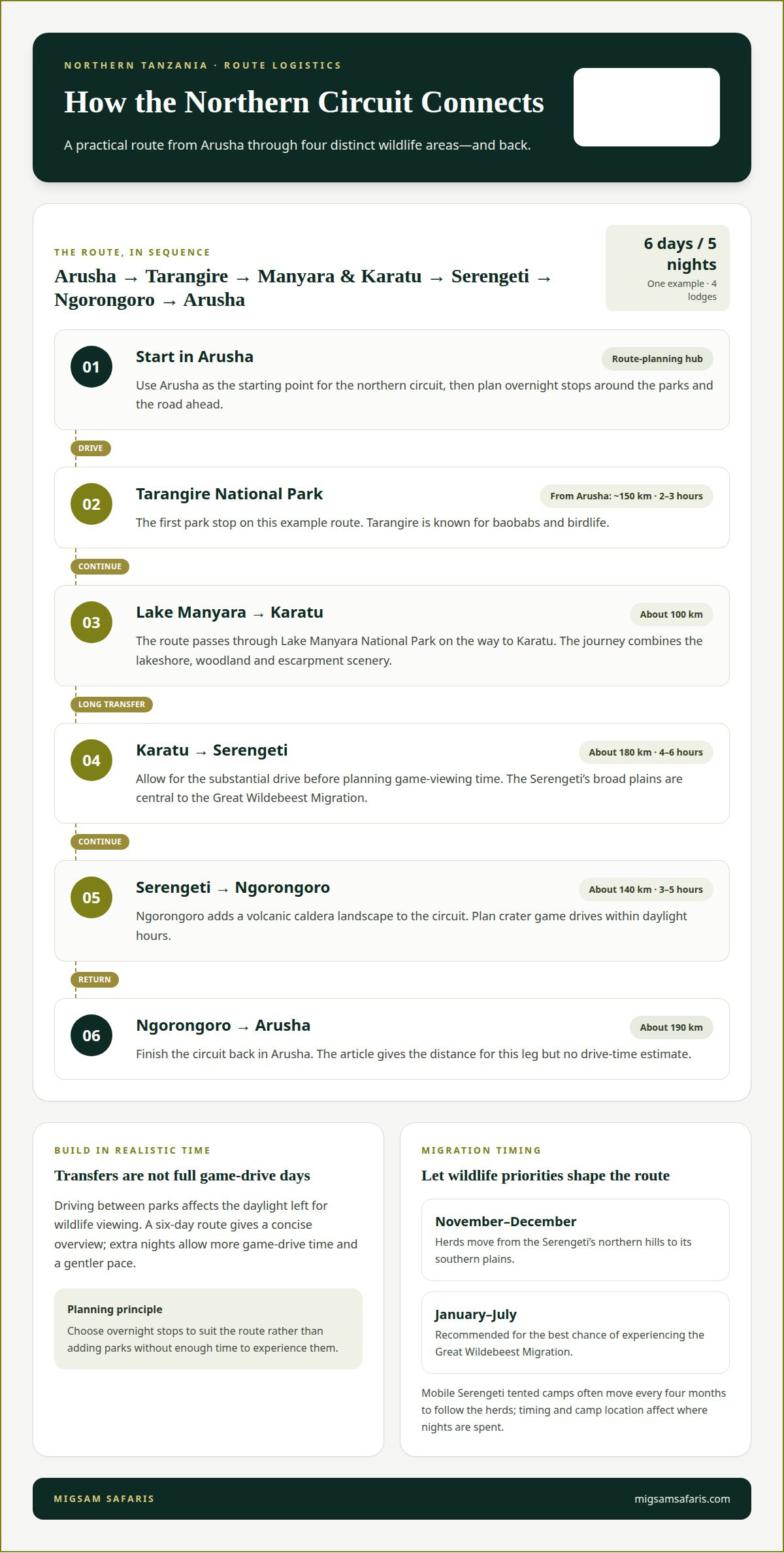
A classic northern route connects Tarangire, Lake Manyara, the Serengeti and Ngorongoro over several travel days. One example covers these four wildlife areas in six days and five nights, with stays at four lodges. The order matters: driving between parks affects the daylight left for wildlife viewing, so don’t count every transfer day as a full game-drive day.
From Arusha, Tarangire is approximately 150 kilometres away, a drive of about two to three hours. The journey from the Tarangire area through Lake Manyara National Park to Karatu is approximately 100 kilometres. From Karatu, allow about 180 kilometres and four to six hours to reach the Serengeti. The route from the Serengeti to the Ngorongoro Conservation Area is approximately 140 kilometres, taking three to five hours. From the crater, Arusha is approximately 190 kilometres away.
A lodge itinerary can follow this sequence, balancing road transfers with nights near each destination. A six-day route gives a concise overview, while extra nights allow more time for game drives and a gentler pace. Choose overnight stops to suit the route rather than adding parks without leaving time to experience them.
Migration-focused itineraries place greater emphasis on the Serengeti. Migrating herds move from its northern hills to southern plains during November and December. January to July is recommended for the best chance of experiencing the Great Wildebeest Migration. Mobile tented camps in the Serengeti often move every four months to follow the herds, so timing and camp location influence where the itinerary spends its nights.
Before settling on a plan, map each overnight stop against the next day’s drive. Keep long transfers from competing with time for wildlife, and choose whether migration or a broader park circuit is your priority. A tailored northern circuit route can bring those choices together in a practical sequence.
Safari duration and starting price
Park entrance fees and conservation charges contribute to the safari budget for the Serengeti, Tarangire, Lake Manyara and Ngorongoro. The total price depends on the itinerary and is provided after a quote request. Park selection, travel dates, accommodation, transport and trip length all affect the cost.
Safari duration choices
Short options include a 3-day Tarangire and Ngorongoro trip or a 4-day Northern Tanzania adventure. A 6-day private lodge itinerary allows a fuller circuit, while an 8-day Great Migration journey gives more time to follow wildlife across the Serengeti. Choose duration by balancing the parks you want to visit against transfer time and the game-viewing time you hope to have.
Prices by departure season
Travel dates shape the route and accommodation choices, especially for migration-focused journeys. Serengeti herds move from the northern hills to the southern plains during November and December, while January to July is recommended for the best chance of experiencing the Great Wildebeest Migration. Compare dates based on the wildlife experience you seek, then consider how camp location and accommodation fit the season.
Per-person safari pricing
A per-person figure reflects the itinerary and its shared or private arrangements. For example, a shared mid-range lodge safari may have a maximum of 7 people per vehicle, while private lodge travel is planned around a dedicated itinerary. Compare the parks, lodging, transport and activities included, rather than treating the headline figure as the only measure of value.
For a useful comparison, consider total trip length alongside the parks visited, travel dates and accommodation style. A Serengeti migration itinerary and a shorter crater-focused route serve different priorities, so compare similar journeys before deciding.
Arusha as the northern circuit safari hub
Arusha, in the foothills of Mount Meru, is a practical starting point for travel across northern Tanzania’s safari region. From here, travellers can begin a route by road or fly towards a park. That choice affects the pace of the journey and how it connects the wildlife areas.
Use Arusha to plan the order of your journey. First, decide which parks matter most; then choose whether driving between them or flying towards a park better suits your plans. A road itinerary connects the landscapes along the way, while a flight can bring you closer to a chosen wildlife area. The best option depends on the route you want to experience, not distance alone.
Arusha can also help frame a journey that combines safari with other northern Tanzania experiences. Mount Kilimanjaro is about a half-hour drive from Arusha, making the city a useful reference point when considering the mountain alongside nearby wildlife destinations. Sequence the safari and other travel carefully so transfers don’t crowd out time in the parks.
Plan the return leg with equal care. The drive from the Ngorongoro Crater to Arusha takes approximately 3-4 hours, so the final day’s timing matters when arranging onward travel. Treat Arusha as both the route’s starting point and its return anchor, and build the itinerary around realistic connections. This approach helps make a northern Tanzania safari circuit feel coherent from arrival through departure.
Ready to shape a route around Arusha, your preferred parks and travel pace? Plan your Northern Circuit safari with an itinerary designed around those choices.
Migsam Safaris: Zanzibar Fly In Safaris
When you’re ready to turn route ideas into a safari plan, Migsam Safaris offers Classic Northern Circuit Safaris focused on Tanzania’s northern parks, as well as Premium Luxury Safaris. For a journey that combines wildlife with an island stay, consider Zanzibar Fly In Safaris or Safari and Zanzibar Journeys.
Consider your preferred pace, the parks you want to visit and whether you’d like to include Zanzibar. These decisions help shape an itinerary around the experience you want, rather than a route chosen at random. Migsam Safaris creates tailor-made itineraries for wildlife encounters across Tanzania, built around your travel priorities.
To discuss a safari journey, visit migsamsafaris.com.
Begin shaping your safari journey
Start with the experience you want to remember: time in the wilderness, focused wildlife viewing or a journey that continues to Zanzibar. Let that preference guide your choices about pace, accommodation and travel between destinations. With your priorities clear, planning a northern Tanzania safari circuit becomes a more personal process, shaped around the moments that matter most to you.
Migsam Safaris offers Classic Northern Circuit Safaris, Premium Luxury Safaris and Zanzibar Fly In Safaris, with tailor-made itineraries for wildlife encounters across Tanzania. Explore these options and choose a starting point that suits the journey you have in mind.
Share your travel ideas and explore a route that feels right for you. Contact Migsam Safaris to plan, and take the first step towards a memorable Tanzania journey.
Frequently Asked Questions
Which national parks and reserves are included in Tanzania’s northern safari circuit?
A classic route often connects Tarangire National Park, Lake Manyara National Park, Serengeti National Park and the Ngorongoro Conservation Area. These destinations offer varied habitats, from Tarangire’s baobab country to the Serengeti’s open plains. Arusha National Park is another destination in northern Tanzania. Choose stops according to your wildlife interests and available travel time.
What is the best time of year to visit the Northern Circuit for wildlife viewing?
The Northern Circuit offers wildlife viewing throughout the year, while January to July is recommended for the best chance of experiencing the Great Wildebeest Migration. Herds move from the Serengeti’s northern hills to its southern plains during November and December. Choose travel dates based on whether migration is your priority or you’re more interested in wildlife viewing across several parks.
How many days are recommended for a Northern Circuit safari itinerary?
Allow time for park visits as well as road transfers. A four-day trip can provide a focused introduction, while six days allows a broader route across northern wildlife areas. Travellers prioritizing the Serengeti migration may prefer a longer itinerary, such as eight days, to allow more time for seasonal wildlife viewing and overnight stops.
What are popular Northern Circuit safari routes and sample itineraries?
A classic route connects Tarangire, Lake Manyara, the Serengeti and Ngorongoro, with overnight stops planned around the driving sequence. For a shorter journey, focus on Tarangire and Ngorongoro instead of trying to include every park. A migration-led itinerary can spend more time in the Serengeti, with travel dates and camp location guiding the route.
How much does a Northern Tanzania safari cost per person, including accommodation and transport?
The per-person price depends on the itinerary and is provided after a quote request. Park choices, travel season, accommodation style, transport arrangements and trip length all influence the total. Migsam Safaris’ listed itineraries specify accommodation, transfers and meals. Compare these inclusions alongside the route to understand what each tailor-made journey covers.
How can travelers get to the Northern Circuit from Arusha or Kilimanjaro Airport?
From Arusha, travellers can start by driving to a park or flying towards one. If arriving at Kilimanjaro Airport, plan onward travel to Arusha as the starting point for the safari route. The choice between road and air depends on the parks in your itinerary and how you want to connect them.


